10 Apr 2026
Atlantic City Casinos See Slight Revenue Uptick but Profit Dip in 2025 Amid Tough Competition

Key Figures from the 2025 Casino Report
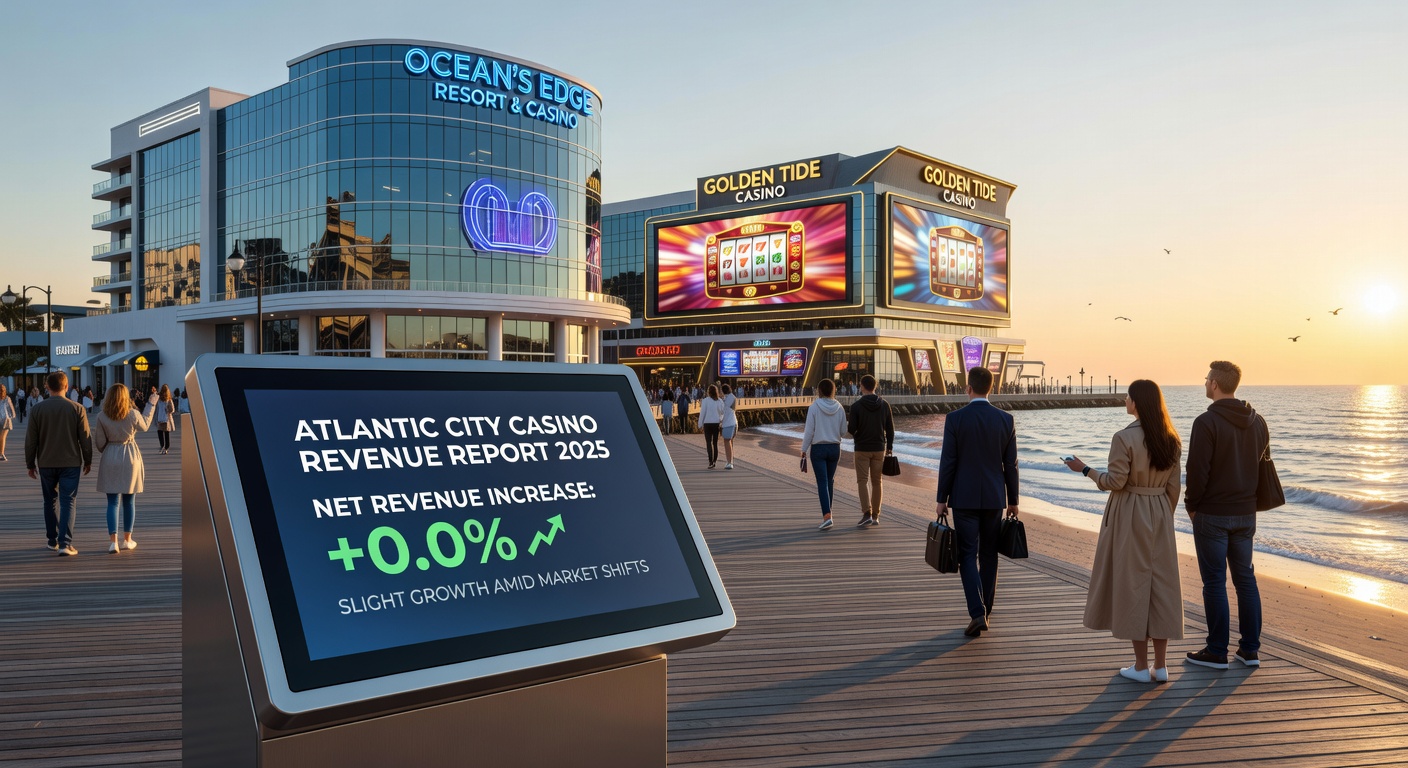
Data from the 2025 annual casino profit data reveals that Atlantic City's nine casinos posted a modest net revenue increase of 0.6% to $3.24 billion for the year, yet gross operating profits fell 1.4% to $665.42 million; this mixed performance underscores the pressures weighing on the industry even as visitor numbers held steady in some sectors.
Turns out, while revenues edged up slightly—thanks in part to steady slot machine play and table game action—costs climbed faster, squeezing margins across the board; observers note how inflationary pressures on everything from labor to energy bills played a big role, and that's before factoring in the stiff competition from New York state's expanding casino scene just up the coast.
What's interesting here is the divergence between top-line growth and bottom-line reality; casinos pulled in more dollars overall, but after expenses, the picture darkened considerably, leaving operators to navigate a landscape where every penny counts more than ever.
Standout Performers and Strugglers Among the Nine Casinos
Borgata stood tall as the profit leader with $237.4 million in gross operating profits, maintaining its position as the market's powerhouse through strong draws in high-end gaming and entertainment offerings; meanwhile, Bally's bucked the trend in the worst way, recording the only gross operating loss at $2.8 million, a stark reminder of how uneven the recovery can be even within the same city.
Four other properties joined the decline parade: Caesars, Tropicana, and Harrah's all saw profits shrink, alongside one additional casino not named in initial breakdowns but contributing to the overall downturn; the remaining casinos—likely including standouts like Ocean Casino Resort and Hard Rock Hotel & Casino—managed to hold ground or post gains, though specifics on those winners remain secondary to the broader story of contraction.
Take Bally's case: operators there faced unique headwinds, perhaps from renovation delays or softer draw in certain demographics, while Borgata's success hinged on its ability to attract premium players who spend big on slots and tables alike; this split highlights how individual strategies make or break outcomes in a market where everyone's chasing the same tourists.
And yet, the nine-casino lineup—Bally's, Borgata, Caesars, Golden Nugget, Harrah's, Hard Rock, Ocean, Resorts, and Tropicana—collectively weathered a year that could have been far worse, with net revenue's 0.6% bump signaling resilience amid economic headwinds.
Inflation and Regional Rivalry Drive the Profit Squeeze
Inflationary pressures hit hard across New Jersey's casino sector, driving up costs for wages, utilities, and supplies at a rate that outpaced revenue gains; data indicates these expenses eroded margins, turning what looked like a stable year into one of contraction for profits, and that's without even touching on the competitive threat from New York.
New York casinos, particularly those in the Hudson Valley and upstate regions, siphoned off gamblers who might have otherwise headed to the Jersey Shore; resorts like Rivers Casino in Schenectady and Resorts World Catskills offered fresh alternatives with modern amenities, pulling day-trippers and weekend crowds away from Atlantic City while operators there scrambled to counter with promotions and upgrades.
Here's where it gets interesting: although Atlantic City still boasts the density of gaming options—nine full-scale casinos right on the boardwalk—proximity to New York means locals and Manhattanites can hop over bridges without the full shore trip; studies of regional gaming flows show this shift accelerating post-pandemic, with New Jersey's market share slipping as rivals invest heavily in expansions.
People who've tracked these patterns often point out how Atlantic City's aging infrastructure plays into it too, requiring costly retrofits to match flashier newcomers; Bally's loss, in particular, exemplifies the risk when one property lags in these upgrades, while Borgata's profits reflect savvy bets on luxury experiences that keep high-rollers loyal.
Broader Challenges in New Jersey's Casino Landscape
The 2025 figures spotlight ongoing economic hurdles for New Jersey's nine-casino market, where gross profits of $665.42 million represent a hard-fought floor rather than a springboard; net revenue at $3.24 billion sounds impressive on paper, but that 1.4% drop signals deeper issues like rising operational costs and shifting consumer habits.
Experts who've studied the sector note how online gaming—legalized in New Jersey since 2013—has cannibalized some brick-and-mortar traffic, although physical casinos still dominate for live entertainment and social vibes; Tropicana and Harrah's declines, for instance, tie into softer convention business amid corporate travel cutbacks, whereas Borgata thrived on its event-hosting prowess.
But here's the thing: the market's maturity means slim pickings for growth, with saturation forcing casinos to compete fiercely on loyalty programs and jackpot chases; one case from the data shows how slot revenue held up better than tables, underscoring player preferences for quick, high-stakes plays over drawn-out poker sessions.
Four decliners out of nine isn't catastrophic, yet it paints a picture of vulnerability; Caesars, with its empire-wide resources, still posted losses here, suggesting localized factors like weather-disrupted summers or marketing misses amplified national trends.
Glimpses into 2026 and Market Watch
As April 2026 rolls around, analysts pore over early indicators from Q1 filings, wondering if 2025's profit dip marks a trough or the start of prolonged pressure; preliminary data hints at stabilized costs in some areas, but New York's aggressive licensing pushes—potentially adding more downstate resorts—keep the ball in Atlantic City's court.
Operators like those at Borgata continue pouring investments into tech upgrades and VIP lounges, aiming to claw back share; Bally's, meanwhile, faces scrutiny over turnaround plans, with whispers of mergers or sales circulating among industry watchers who see consolidation as the path forward.
What's significant is how the 0.6% revenue nudge proves demand endures—tourists still flock for the boardwalk buzz—yet profitability demands ruthless efficiency; those who've navigated past cycles, like the post-Superstorm Sandy rebound, know adaptation is key when external forces like inflation bite.
Now, with federal interest rates possibly easing later in 2026, relief could come via lower borrowing costs for renovations; even so, the nine casinos must innovate, perhaps blending more hybrid online-offline experiences to fend off rivals.
Conclusion
Atlantic City's 2025 story boils down to resilience amid reversal: $3.24 billion in net revenue up 0.6%, but profits down 1.4% to $665.42 million, led by Borgata's $237.4 million haul and dragged by Bally's $2.8 million loss; inflationary squeezes and New York competition fueled the divide, challenging New Jersey's nine-casino hub to evolve or risk further erosion.
Data underscores the tightrope walk ahead, where top-line gains mask bottom-line battles, and individual property strategies dictate survival; as 2026 unfolds, the sector's trajectory hinges on countering costs while captivating crowds, proving once again that in gaming, it's not just about the bets placed but the house edge preserved.