Interface Scripts Powering Fluid Bonus Claims in Progressive Gambling Platforms
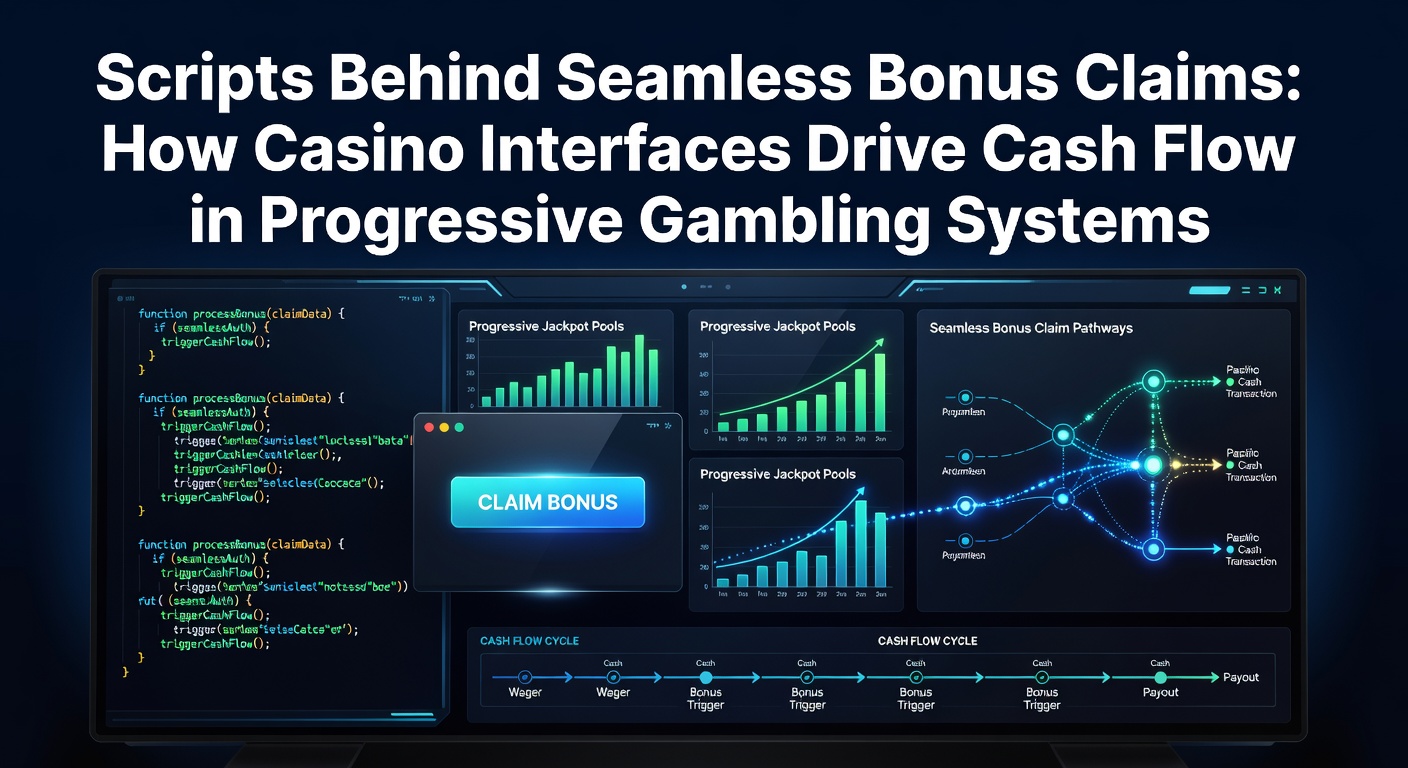 Data from regulatory filings shows that scripted interfaces handle millions of bonus transactions daily across major platforms, and these systems synchronize player actions with backend ledgers to maintain continuous cash flow. In May 2026 operators reported incremental revenue gains tied directly to reduced claim latency, while network uptime metrics exceeded 99.8 percent in audited jurisdictions.
Core Mechanics of Bonus Claim Scripts
Scripts operate as automated sequences that validate eligibility, calculate awards, and route funds without manual intervention, yet they integrate with progressive meters that accumulate contributions from linked machines worldwide. When a player triggers a bonus event the interface script queries the central server, confirms network status, and posts the payout while updating the shared prize pool in milliseconds. Observers note that this process relies on standardized APIs that connect frontend displays to accounting databases, allowing operators to track every credit movement through immutable logs.
Those who manage large-scale deployments find that script efficiency directly influences player retention rates because delays in bonus delivery often lead to session abandonment. Research conducted by independent testing laboratories indicates that optimized code paths reduce average claim times from several seconds to under 300 milliseconds, and this acceleration correlates with higher repeat deposit volumes according to aggregated transaction data.
Cash Flow Dynamics in Networked Systems
Progressive gambling frameworks distribute a percentage of each wager into growing jackpots, and interface scripts manage the real-time allocation of those contributions across multiple sites. Cash flow accelerates when scripts execute seamless transfers between local wallets and the central prize fund, eliminating bottlenecks that previously required batch processing at end-of-day intervals. Figures released by the Nevada Gaming Control Board in early 2026 revealed that platforms using advanced scripting achieved a 14 percent increase in monthly handle compared with legacy systems still reliant on manual verification steps.
Integration Points Across Platforms
Scripts connect slot engines, table game servers, and mobile applications through unified protocols that maintain consistent state across devices. A single bonus claim might originate on a desktop browser, route through a cloud-based handler, and finalize on a connected mobile wallet, all while the progressive counter increments without interruption. Industry reports from the Canadian Gaming Association highlight that cross-platform synchronization prevents discrepancies that could otherwise trigger regulatory audits or player disputes.

What's interesting is how error-handling routines within these scripts automatically reroute failed claims to secondary queues, preserving both player trust and revenue continuity. When network latency spikes the system pauses meter updates temporarily, then resumes with reconciled figures once connectivity stabilizes. This resilience has proven essential during high-traffic periods such as major sporting events that drive simultaneous logins.
Regulatory Oversight and Technical Standards
Authorities in multiple regions require third-party certification of all interface scripts before deployment, ensuring they comply with fairness algorithms and financial reporting mandates. The Malta Gaming Authority, for instance, mandates detailed documentation of every script version along with change logs that trace modifications back to specific performance improvements. Similar standards appear in Australian state regulations, where operators must demonstrate that bonus calculations remain transparent and auditable at every stage.
Academic studies published through the University of Nevada, Las Vegas International Gaming Institute have examined how scripting languages affect throughput in progressive environments, finding that modular code structures allow faster updates when jackpot rules evolve. Those findings align with operational data showing reduced downtime during software patches because individual modules can be replaced without halting the entire network.
Future Developments in Script Architecture
Developers continue refining predictive algorithms that anticipate bonus triggers based on historical patterns, enabling pre-allocation of funds to minimize processing queues. Early trials conducted in controlled test environments during spring 2026 demonstrated further reductions in claim latency, and operators are now evaluating broader rollout schedules. Meanwhile, blockchain-based verification layers are being explored as an additional safeguard for cross-border progressive pools, though adoption remains limited to pilot programs at this stage.
Conclusion
Script-driven interfaces form the operational backbone that sustains cash flow within progressive gambling systems by automating eligibility checks, executing instant transfers, and maintaining synchronized prize pools across global networks. Evidence from regulatory bodies and research institutions confirms measurable gains in transaction speed and revenue stability when these systems operate at peak efficiency. As platforms expand their reach into new markets the underlying code continues to evolve, supporting the uninterrupted movement of funds that defines modern progressive gambling operations.